the Abia Tech & Innovation Summit 2025

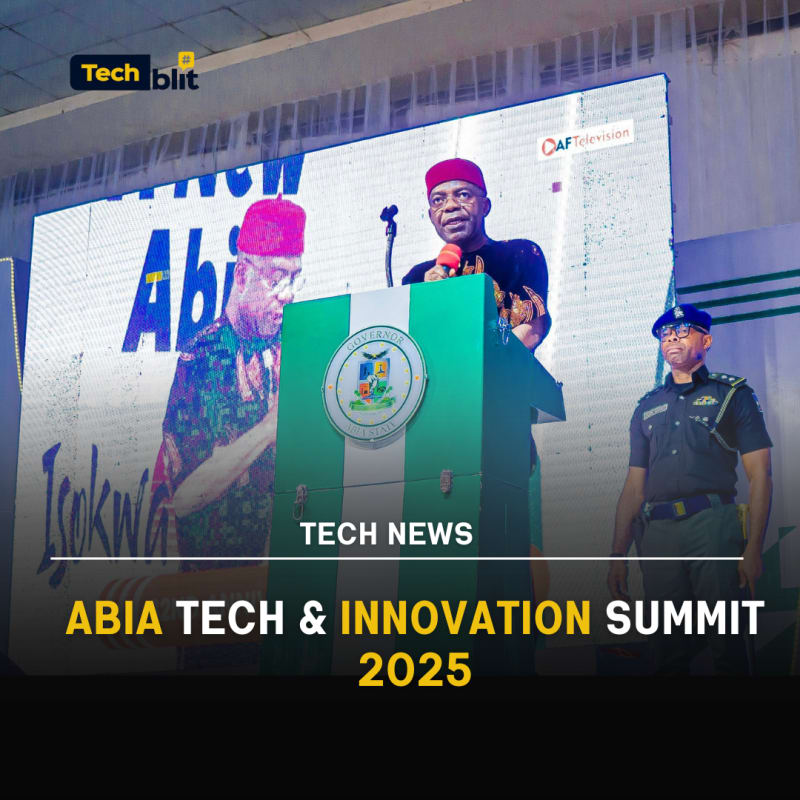
The summit kicked off with a high-energy press conference where Governor Otti delivered a keynote that resonated deeply with the audience. He articulated Abia’s evolution from its historical nickname as the “Japan of Africa”—earned through Aba’s renowned leather and textile craftsmanship
A Deep Dive into the Abia Tech & Innovation Summit 2025
In the heart of Nigeria's South-East, where the Niger River meets bustling markets and emerging startups, Abia State is rewriting its story, not as a footnote in Africa's economic narrative, but as a bold chapter in technological transformation. The Abia Tech & Innovation Summit 2025, held from December 10 to 12, 2025, at the Ochendo International Conference Centre in Umuahia, embodied this shift under the theme "Abia: Africa's Emerging Innovation Powerhouse." This three-day extravaganza wasn't just an event; it was a clarion call for Africa's youth, entrepreneurs, and policymakers to harness technology for sustainable growth. As Governor Alex Otti declared in his opening address, "Innovation isn't a luxury, it's the engine of our prosperity." If you're wondering how a single state summit can ripple across the continent, read on. This article unpacks the essence of the summit, its groundbreaking sessions, star-studded speakers, and lasting impact, while demystifying key tech concepts along the way.
The Rise of Abia: From Industrial Roots to Digital Frontier
To appreciate the summit, let's rewind. Abia State, often called the "Japan of Africa" for its leather and textile industries in Aba, has long been a hub of craftsmanship. But under Governor Dr. Alex Otti's administration since 2023, the state has pivoted toward a digital economy, a term referring to economies driven by information technology, data, and online platforms rather than physical goods alone.
Key milestones include:
TechRise Programme: Launched in 2024, this initiative trained over 5,000 youths in coding, AI, and web development, with top graduates receiving laptops and jobs. It's a prime example of upskilling, equipping people with modern skills to thrive in a tech-driven job market.
Abia Start-Up Bill (2025): Recently passed into law, this legislation creates funding, mentorship, and regulatory support for startups (young companies innovating solutions to real problems, like apps for farmers or AI tools for healthcare).
Innovation Hubs: Places like RAD5 Tech Hub in Aba and Softicu Hub in Umuahia foster startups through co-working spaces, accelerators (programs speeding up business growth), and investor pitches.
The summit capped Abia Tech Week, a series of pre-events building this ecosystem. Organized by the Abia State Ministry of Science, Technology & Innovation in partnership with the United Nations Development Programme (UNDP) and the Abia Technology & Innovation Network (ATIN), it drew over 2,000 attendees, students, developers, investors, and global leaders. By blending policy, practice, and passion, Abia is proving that tech isn't reserved for Lagos or Silicon Valley; it's scalable anywhere with vision.
Event at a Glance: What Went Down?
Picture this: A sprawling conference center buzzing with LED screens, live demos, and cultural soirées under starry skies. The summit was free to attend (registration closed December 8 via abiatechweek.ng), targeting innovators, policymakers, and curious minds eager for networking and insights.
Day-by-Day Breakdown
The agenda was a masterclass in structured chaos—keynotes for inspiration, workshops for hands-on learning, and exhibitions for real-world demos. Here's a snapshot:
Day | Time | Highlight Session | Focus |
|---|---|---|---|
Dec 10 (Launch Day) | 10:00 AM | World Press Conference & Declaration | Governor Otti's vision for Abia's tech decade. |
11:00 AM - 4:00 PM | UNIPOD Launch (UNDP Innovation Pod) | Official unveiling of a new facility at Michael Okpara University of Agriculture, Umudike, for startup incubation, think shared labs for prototyping ideas. | |
12:00 PM | Grand Finale: Abia Startathon | Pitch competition for TechRise alumni, awarding seed funding to winning ideas tackling local challenges like agriculture tech (agritech). | |
4:00 PM | Innovation Walk & Evening Soirée | A cultural-tech fusion: Stroll through exhibits, then network over Igbo music and cuisine. | |
Dec 11 (Core Day) | All Day | Plenary Sessions & Workshops | Deep dives into AI ethics, fintech, and sustainable energy. Panels on "Building Africa's Unicorn Valley" featured investor Q&As. |
Evening | Startup Innovation Challenge | Graduates pitched solutions, judged by experts, and outcomes included $50,000 in prizes and mentorship deals. | |
Dec 12 (Wrap-Up) | Morning | Closing Keynotes & Awards | Reflections on outcomes, with announcements for Abia Tech Hub expansions. |
Workshops covered practical skills like no-code tools (building apps without programming) and blockchain for supply chains—vital for Aba's traders. Exhibitions showcased 20+ startups, from drone farming to AI health diagnostics. Live streams on X (formerly Twitter) captured the energy, with hashtags #ATIS2025 and #AbiaMSTI trending locally.
Spotlight on Speakers: Voices Shaping Tomorrow
The lineup was a who's who of African innovation, blending local heroes with continental heavyweights. Each brought stories that educated as much as they inspired—explaining complex ideas like machine learning (algorithms that learn from data to predict outcomes) in relatable terms.
Dr. Alex Otti (Governor, Chief Host): The architect of Abia's tech renaissance, Otti shared data on how digital skills could boost GDP by 20% in five years.
Bosun Tijani (Nigeria's Minister of Communications, Innovation & Digital Economy): Keynote on national policies like the 3MTT Programme (training 3 million in tech), urging Abia to lead in digital public goods (free tools like open-source software for all).
Dr. David Kalu (Commissioner for Science, Technology & Innovation): Oversaw the UNIPOD launch, emphasizing inclusive tech for rural women.
Bunmi Ngozi Osinbajo (Tech Policy Expert): Discussed ethical AI, warning against biases in algorithms that could exacerbate inequalities.
Edward Esene (Serial Entrepreneur): Founder of ventures like SeamlessHR; spoke on scaling startups in emerging markets.
Obi Asika (Media Mogul, CEO of Out of Africa Entertainment): Explored creative tech intersections, like NFTs for Igbo art.
Hanson Johnson (Fintech Innovator): Shared fintech success stories, demystifying decentralized finance (DeFi) as "banking without banks."
Mr. Sam Daibo (Venture Capitalist, EchoVC Partners): On funding pitfalls—why 90% of startups fail and how to beat the odds.
Prof. Ndubuisi Ekekwe (Tekedia Institute Founder): A likely highlight (based on pre-event buzz), focusing on hardware innovation for Africa's manufacturing.
Chinenye Mba Uzoukwu (Innovation Leader): Delivered "key nuggets" on ecosystem building, stressing collaboration over competition.
Kamaldeen Raji (MD, AFEX Commodities Exchange): Agritech session on using data analytics to predict crop yields, bridging farming and tech.
These talks weren't monologues; interactive Q&As sparked debates on topics like data privacy in Africa's GDPR era.
Highlights and Breakthrough Moments: What Stole the Show?
As the summit unfolded (and wrapped on December 12), real-time buzz on social media painted a vivid picture: Attendees gushed over the "unforgettable energy," with videos of drone demos and pitch battles going viral. Standouts included:
UNIPOD Launch: A game-changer, this UNDP-backed pod at MOUAU will incubate 100 startups annually, focusing on agritech and healthtech. Early commitments: Partnerships with Google for AI training.
Startathon Winners: Three teams snagged funding, one for an AI soil-testing app reducing farmer losses by 30%.
Networking Magic: Over 500 investor-startup matches, including a $200,000 seed round for a Umuahia-based edtech firm.
Cultural-Tech Fusion: The soirée blended Afrobeats with VR exhibits, showing how tech preserves heritage (e.g., digitizing Aba's shoe designs for global e-commerce).
Outcomes? Immediate: Launch of the Abia Start-Up Portal for funding access. Long-term: A roadmap for 10,000 jobs via tech by 2027. As one attendee tweeted, "Abia isn't just talking tech, we're building it." Challenges noted? Infrastructure gaps, like reliable power for data centers, but solutions like solar-powered hubs were prototyped on-site.
The Bigger Picture: Why This Matters for Africa (And Lessons for You)
Educationally, the summit underscores innovation ecosystems, networks of hubs, policies, and talent, creating a "flywheel" effect where ideas attract investment, which fuels more ideas. For Africa, where youth unemployment hovers at 60%, events like this democratize opportunity. Abia's model? Affordable training + policy incentives + global ties = exponential growth.
Lessons for aspiring innovators:
Start Small, Scale Smart: Use free tools like GitHub for coding or Canva for prototypes.
Ethics First: As Osinbajo noted, tech must serve all; audit your AI for biases.
Collaborate Locally: Join hubs; Abia's success stems from Aba traders partnering with coders.
Measure Impact: Track metrics like user adoption, not just likes.
In a continent racing toward a $180 billion digital economy by 2025, Abia’s summit proves that underdogs can lead. It challenges the narrative: Why outsource innovation when we can own it?
Final Thoughts: Join the Powerhouse
The Abia Tech & Innovation Summit 2025 wasn't an endpoint; it's a launchpad. As echoes of keynotes fade, the real work begins, turning talks into tools that lift communities. If you're in tech, policy, or just curious, follow ATIN on X or visit abiastate.gov.ng for recordings and next steps. Abia is rising; will you build with it? Drop your thoughts below. What innovation would you pitch for Africa's future?
This article draws from official sources and live updates as of December 12, 2025. For more, explore the summit's digital archive at abiatechweek.ng.


